INTERVIEW: Peruvian filmmaker and content creator Luciana Salinas on keeping up with an ever-changing industry
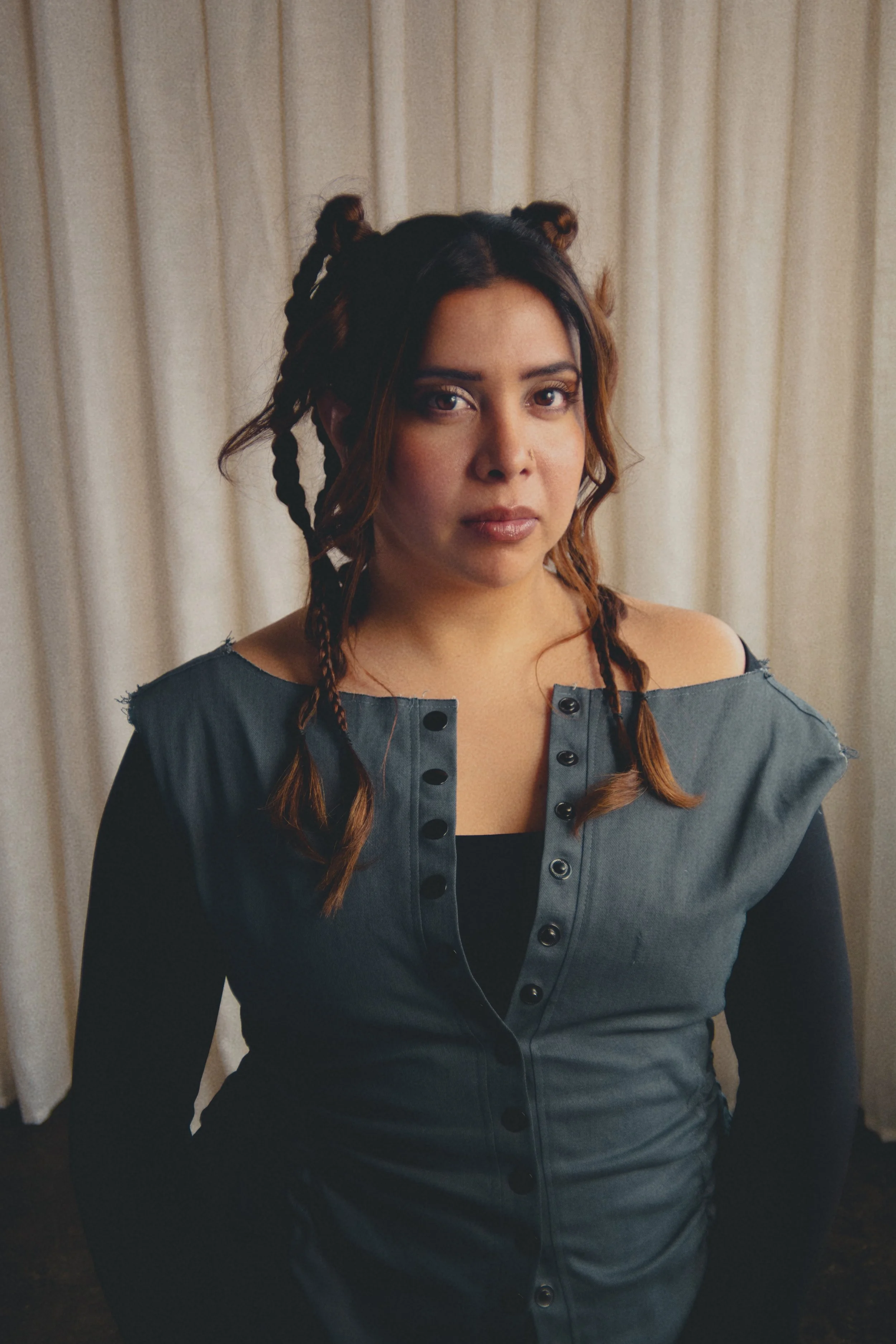
Luciana Salinas is a filmmaker and content creator from Peru. Photo by Lucinda Harstrick
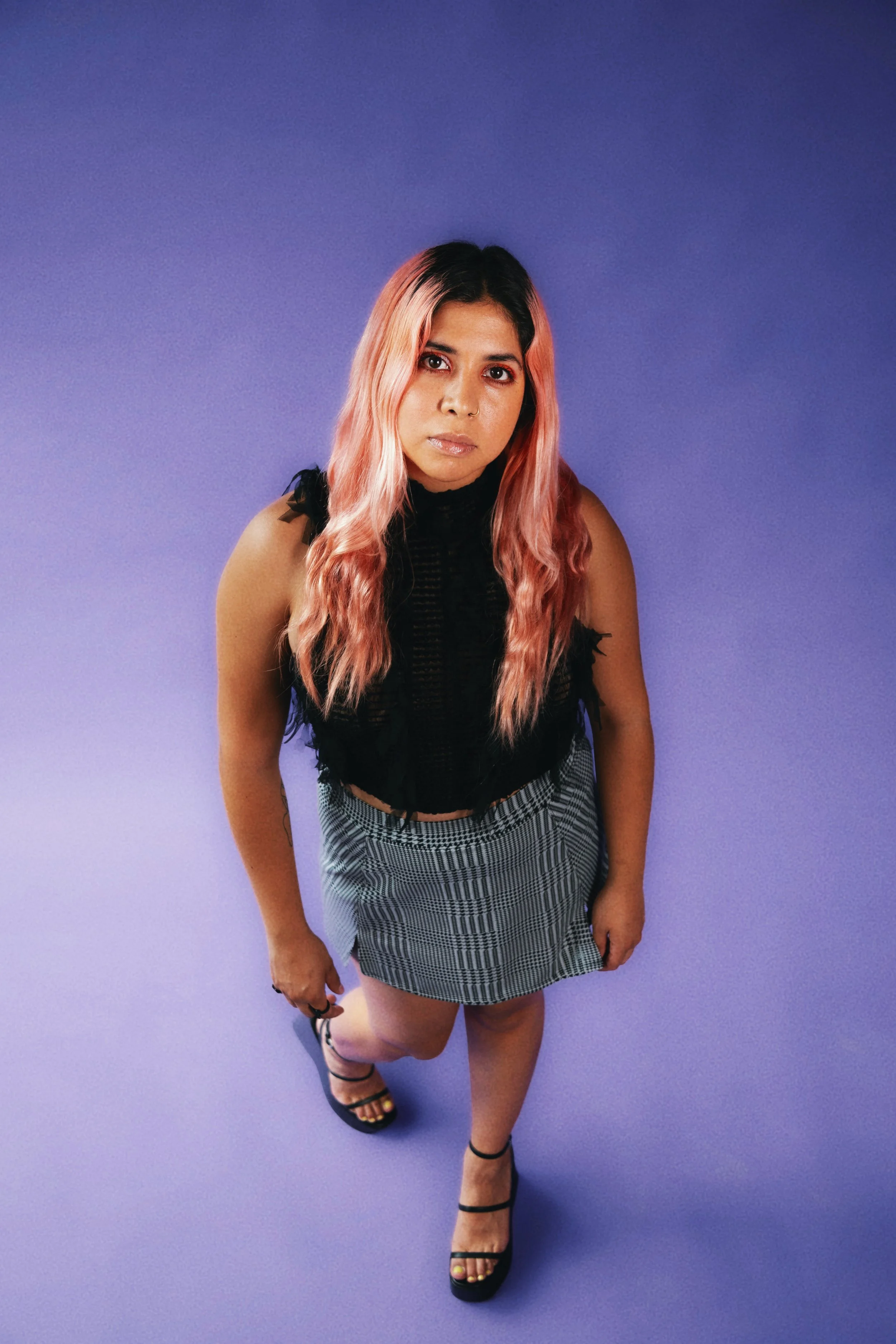
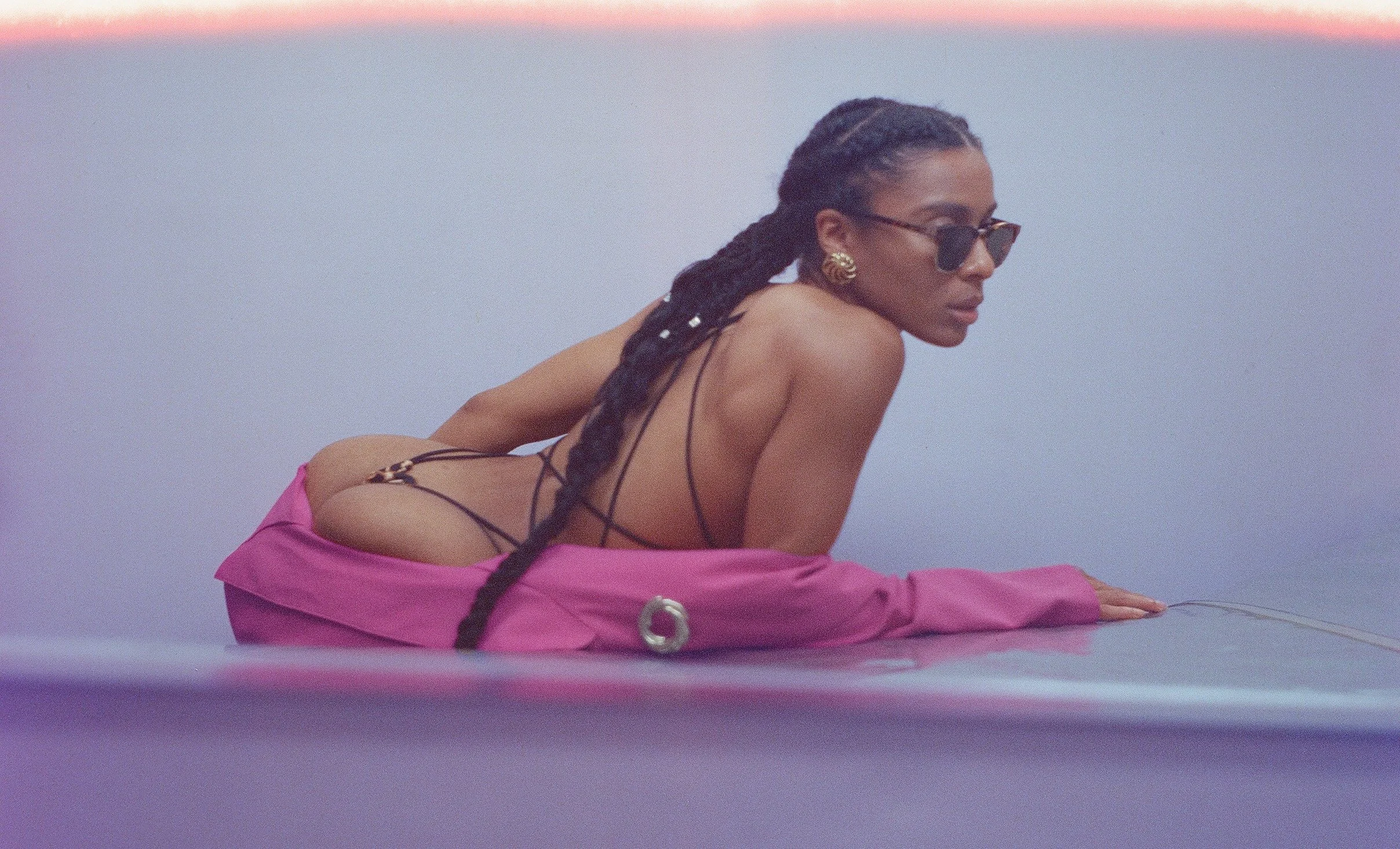
Self portrait by Luciana Salinas.
Luciana Salinas is a 32-year-old Peruvian content creator and filmmaker currently living and working between Chicago and New York City. Recently, Salinas worked on the short film “Junction,” which showed at the Madrid Shorts film festival, Berlin Kiez film festival, and Chicago’s Cariño Festival de Cine. Salinas frequently directs and shoots music videos for local artists and collaborates with collectives centering female voices. Salinas sat down with Mustard Magazine to talk about her roots in South America, navigating hustle culture, and the challenges of an industry that’s always changing.
Mustard Magazine: You’re originally from Peru but have called Chicago home for the past decade. What was it like growing up in South America?
Luciana Salinas: I grew up in the south of Peru, in Cusco, because half of my family's from there. And then I also lived in the Amazon, because of my dad's job. Eventually I moved to Lima, the capital, and finished school there.
I grew up in a house where people didn't come from money [but] sort of made their way, built their way out. I think that's the Peruvian spirit. We are definitely a society of entrepreneurs and people that create their own jobs. As a society, family and your close community are definitely the people that you rely on.
If you're somebody who lives in a small town in Peru and you want to go to the big city for college, your friends, your mom's friend, or your godmother or somebody will help you, or you'll live with them. I feel like in the last couple of years, Peru has had so much political turmoil, but somehow we still function as a society, and it's because of the people.
That's something that I treasure a lot. [Here in Chicago], I'm starting from zero, and I've been building a community of people of different backgrounds, just knowing that we're here to support each other. I think that's something beautiful that Chicago has supported.
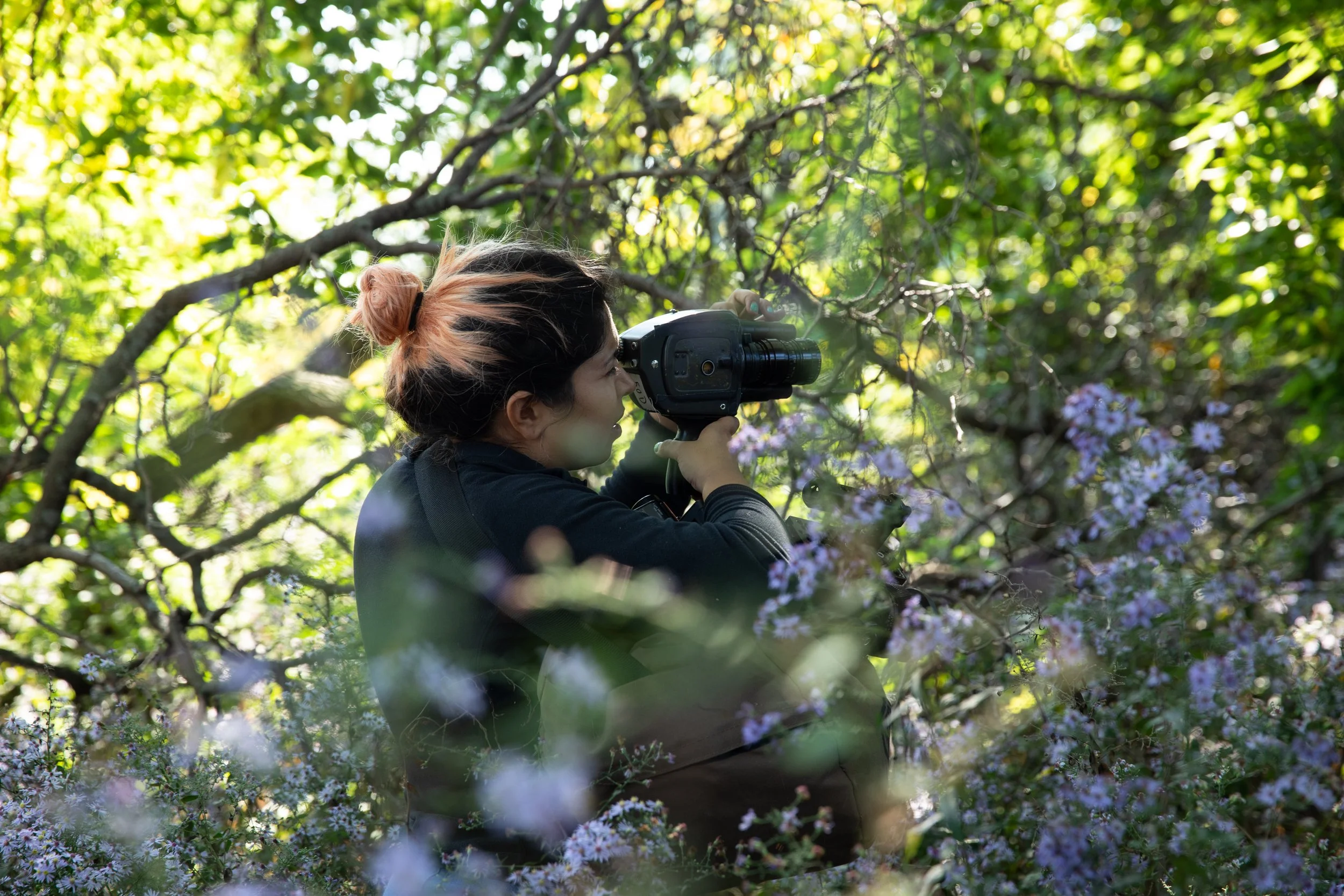
Luciana Salinas films a music video for Chicago band Lunar Ash.
MM: Tell us more about your experience as a filmmaker in Chicago.
LS: We've been sort of going through waves of growth in Chicago. I think [there’s still] some sort of barrier. Commercials, TV shows, and feature films will come and shoot here, but the creatives [involved] are still coming from out of town. Like, they're still bringing a director and a DP from New York. I feel like there's really a lot of talent here, and I wish that those positions of leadership were also sourced from here.
MM: Speaking of New York, you currently spend your time between here and there, right?
LS: Yes, I live between both. And this talks to that dynamic. I kind of do the same thing that I'm commenting on. There’s definitely a bigger pool of projects in New York. I feel like a lot of people that are very talented and based in Chicago eventually have to move to either New York or LA. The industry has also changed so much, because I feel like, right now, even people that are based in LA or New York are constantly working outside those cities because it's so expensive. It's cheaper to come here [to Chicago] and produce a commercial.
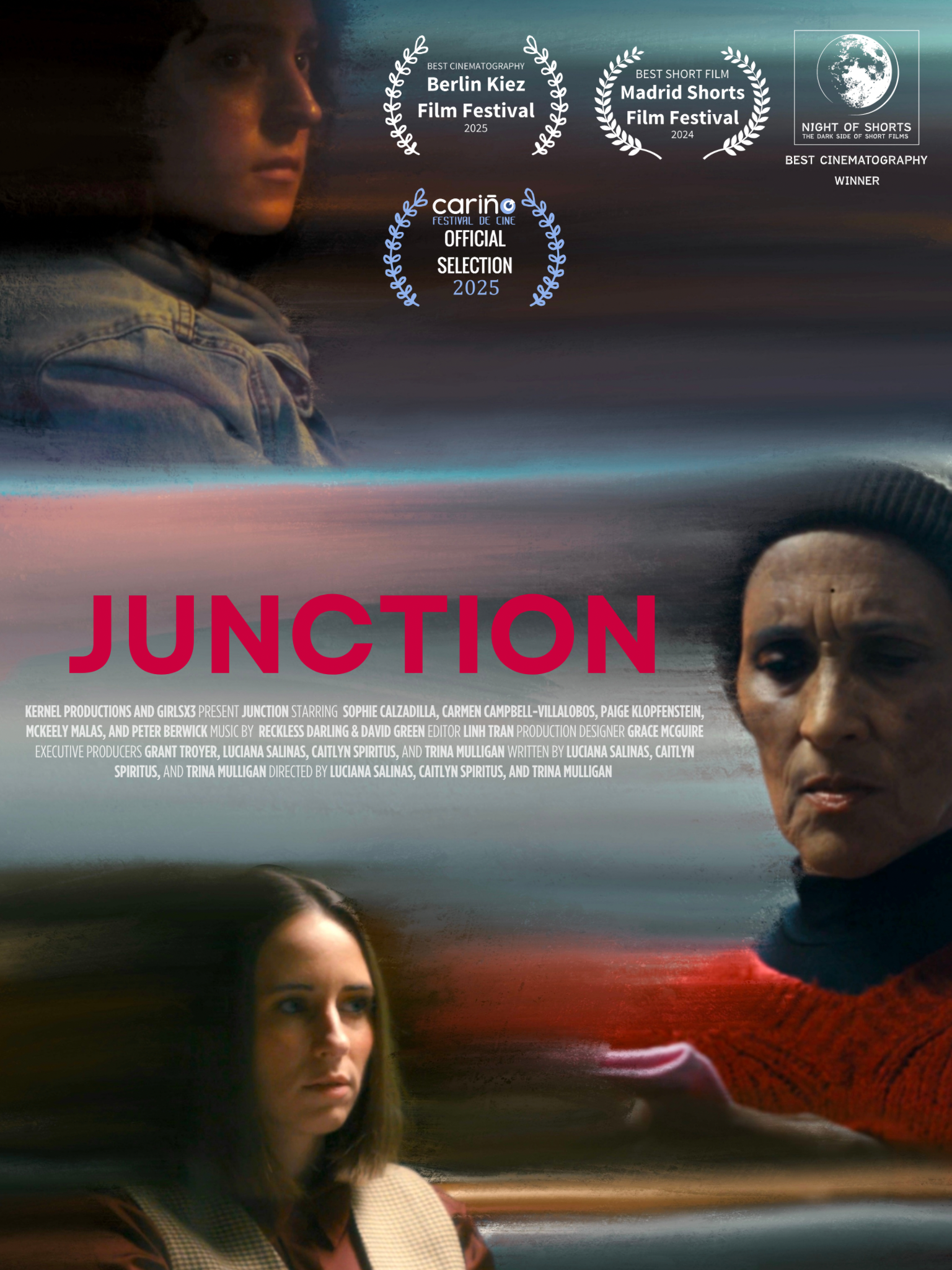
Salinas co-wrote and directed “Junction” with Caitlyn Spiritus and Trina Mulligan.
MM: How did the short film “Junction” come together?
LS: Me and my two filmmaker friends Caitlyn Spiritus and Trina Mulligan, we were sort of feeling like, ‘We have work, we pay our bills, but we needed a creative outlet.’ So it started with the photo series back in 2020. We essentially wanted the series [to feature] the same subject, sort of like a vignette, and everybody will sort of rotate roles—one would be the main photographer and creative director, another one would be a lighting assistant, and then the other one will be a producer, and then we switched, depending on who was shooting that day. So we did that in a photo series format. And then we said, “We should do this again, in a video format.” So that's what we did. We developed a script, three little stories, independent to each other, and then we sort of weaved them together in time and space.
It's a group of strangers that are crossing each other's paths, and everything's happening sort of like in the span of one night. It was interesting because we definitely had a lot of learning experiences. We got some private investments and we put our money in as well. We did a crowdfunding campaign, and we were looking for a lot of partners, in the sense of rental houses, or people or vendors who wanted to join us in this adventure. We found out that a lot of people in Chicago actually want to help female filmmakers, and that was very lovely.
MM: What are some common struggles that content creators face today?
LS: I think it's easy to find yourself consuming a lot of content, and then inevitably, you're influenced by the things that you see. What's the fine line between getting influenced, [or] inspired, and then sort of falling into this line of making the same content—not necessarily because you want to—but more because the industry is demanding it from you?
It's been a very interesting journey. The way we produce and make content these days, it's definitely mutated. As a freelance artist, you sort of operate under different umbrellas. You're your own brand ambassador, your own accountant, your [own] CEO. It's definitely a constant moment of keeping up with what's new and what's happening, but at the same time, [asking], how do you preserve your own artistry?
Because there's this saturation of content, you really have to be very intentional. Especially with the Gen Z generation, they're a very tough audience. They're into niche things and the way they consume is so different than millennials.
MM: And you're right on the cusp.
LS: Yeah. I have a Gen Z brother, and sometimes he tells me, ‘I feel like you are more Gen Z than Millenial,’ and I'm like, ‘No, no, I'm not.’ It's just that I work in entertainment, so it's kind of like in my face every single day. We're constantly adapting to the ways people consume things, and the way content is being made is changing every day. The trends keep changing.
MM: Before you went to school for film, you also studied the culinary arts. Can you tell us more about that?
LS: In Peru I went to culinary school, so I was working in the food industry for like five years. I took a year off after graduating [high school] and at that point my parents were like, ‘Okay, so what are you gonna do?’ I didn't really want to go to college to be honest, and I like cooking. Peru was having this culinary boom, so I sort of went ‘Fuck it, I'm just gonna go.’ I met so many talented people, but I realized ‘This is not what I want to do,’ you know? And I think for me, it doesn't matter what you're doing, as long as you really want to do it. Because you can be tired, exhausted, burnt out, but if it's something that you truly are passionate about, it won't matter. So I found myself working in restaurants, and I just didn't feel fulfilled. I had friends who were so passionate about working in the culinary scene and that was their dream. And I was like, I don't feel that.
During that whole time that I was working in restaurants, I would still take editing classes, or script-writing classes, and then I started making short films, just wanting to learn. I quit my job and went to live with my dad for a couple months in the Amazon, just to kind of figure out some things. I went to a short-form script writing class with this filmmaker that is very famous in Peru. I was super excited, and I met this girl in my class who worked at a post-production company, and I told her at the end of our course, ‘If you ever need an intern or something, I'm just trying to learn.’ She brought me in and introduced me to the her boss, so I went there as an intern. I learned so much about post production and effects and animation and color and editing. I had the best boss, because he really took me under his wing and really taught me so much.
MM: When did you decide to move to Chicago?
LS: I really wanted to go to film school, but there were not a lot of film schools in Peru at the time. I applied to a bunch of schools, and then I found a school in Chicago, Columbia College, that had a program that was very hands-on, and I liked that about it. And also, it was half the price. So I was like, ‘Okay, this seems more sustainable.’ So that's how I decided to come to Chicago. I'm actually thankful that I got to go to Columbia. I think it worked for me for where I was in my life.
MM: How have you been able to balance the go-go-go aspect of freelance hustle culture while staying grounded?
LS: It’s definitely been a journey to get there. I've always been my worst critic, and I think it was hard for me to take any sort of compliment. I learned how to separate the art that I make from myself. We're connected, but I can be critical in a way [that doesn’t] bring myself down. The first time I went through the process of [applying for] the artist visa was definitely a mind-fuck because I was like, ‘Wow, I don’t ever talk about myself.’ I'm not that kind of person. And so to be able to switch gears and learn how to do that was not easy. It’s almost like the joke, right? As an artist, you're not always the best business person, but we have to learn that. You have to be really good at marketing or at least have a very in-depth understanding of what you need to do.
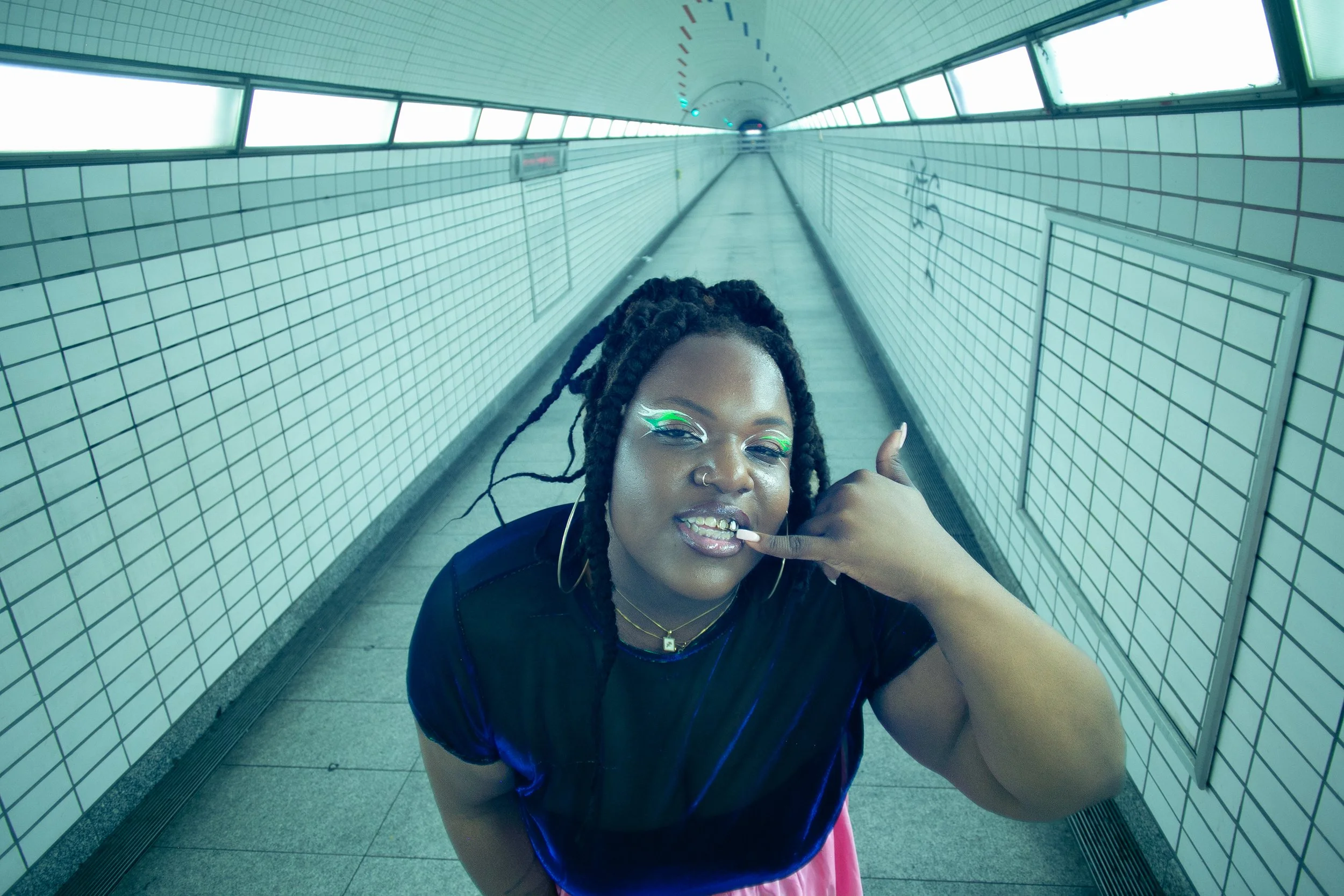
J-Bambii by Luciana Salinas.
MM: What are you excited to be working on right now?
LS: Right now I work creating content for brands and advertisements on social media. There's this artist that I work with, J Bambii, she's a [Chicago-based] rapper. We did a live film of one of her performances, and it's almost in the final stages of post production, so hopefully we'll be able to share that soon. And then I'm working with this collective, Everywhere Social Club, [that’s launching] a queer, alcohol-free social club in Uptown. It’s been really fun to work with all of them and we're going to be dropping some content in the next couple of weeks. I'm also focusing on doing a lot of beauty and fashion content — that's what I've been working on currently.
To check out more of Luciana Salinas’ creative work, visit her website here.
